



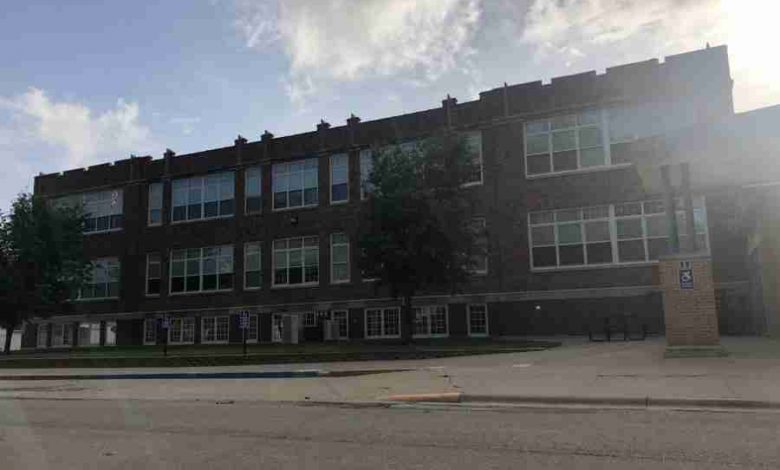
The North Iowa School Board set its legislative priorities for the 2027 session of the Iowa Legislature at the September 21 school board meeting.
The board participated this year in the Iowa Association of School Boards (IASB) legislative policy process by talking about the impact of state policy on the district and voting on legislative resolutions for the next legislative session.
The school board determined that the following priorities for 2027 are critical to students and taxpayers in the school district:
● Governance/Home Rule: Supports local accountability and decision-making including:
○ Funding flexibility: School boards should have the ability to maximize existing resources to meet local needs;
○ Student Achievement: As locally elected officials, school boards should have the ability to set priorities, customize programming, and maximize community strengths to improve outcomes for all students;
○ Accountability & Reporting: Data collection for state accountability should enhance the ability of school boards to focus on student learning and school improvement. IASB
supports streamlining state-level reporting on management operations and eliminating
duplicative or inefficient reporting processes;
○ Transparency: School boards should have the flexibility to provide public access to records in ways that promote transparency for citizens while balancing the cost to taxpayers.
● Supplemental State Aid: The school aid formula is the biggest driver in providing resources for a high-quality education that translates to a successful future for our students and economic growth in our state. A school’s general fund supports a high-quality teacher workforce, critical for student achievement. We support state policies on supplemental state aid rate that:
○ Sufficiently supports the ability of local districts to meet parent and community
expectations and provide a world-class education for all students.
○ Provides the resources to recruit and retain a high-quality teacher and staff workforce.
○ Incorporates inflation and cost-of-living increases to minimize the negative impact on a district’s general fund from these increased costs.
● High-Quality Workforce: A highly skilled teacher workforce is essential to student achievement and can be supported state policies that:
○ Ensure high-quality teacher preparation programs, including alternative licensure programs that can include in-classroom experiences, pedagogy training, content knowledge in curricular areas and mentoring for individuals with non-traditional or international education backgrounds;
○ Encourage initiatives and programs that diversify Iowa’s teaching profession to better match our student demographic makeup;
○ Support increased funding and more equitable distribution for the Teach Iowa Scholar loan repayment program;
○ Create programs for student teaching grants and stipends and expand teacher
apprenticeship programs to make education careers a more attractive and affordable
option;
○ Create a program to provide beginning teacher incentives and recruitment incentives to attract high-quality teachers;
○ Create reciprocity agreements with other states that have high-quality teacher preparation programs to increase diversity among certified teachers and administrators.
○ Operate under the guidance of locally elected board members who are entrusted with
taxpayer dollars for the purpose of improving student achievement and skill proficiency for all students;
○ Welcome all students regardless of race, religion, gender, gender identity, sexual
orientation, socio-economic status, or disability;
○ All schools that receive any public funds, including property taxes, state aid or federal
monies, should be subject to the same governance and educational standards as public
school districts.
● Unfunded Mandates: Mandates on school districts that are imposed without funding put pressure on the school’s general fund budget and can negatively impact efforts to provide a high-quality education for all students. We oppose any mandate that does not provide adequate and direct funding for successful implementation.
● Mental Health: Supports efforts to establish comprehensive community mental health systems to offer preventative and treatment services and comprehensive school mental health programs that include:
○ In-school and telehealth access for students to mental health professionals;
○ Creation of a categorical funding stream designated for mental health professionals;
○ Reimbursement by Medicaid and Private insurers for in-school services;
○ Ongoing teacher, administrator, and support staff training to improve awareness and
understanding of child emotional and mental health needs;
○ The integration of suicide prevention and coping skills into the existing curriculum;
○ Expanding state-funded loan forgiveness programs to include mental health professionals who agree to provide services to schools;
○ An ongoing mental health resources clearinghouse for schools and community providers;
○ The support of mental health needs of educators and staff.
The grassroots IASB legislative process involves all school board members in Iowa. Together, school leaders make a difference. Resolutions submitted by school districts will be reviewed by the IASB Board of Directors before being debated and adopted by the IASB Delegate Assembly at its annual meeting on November 19 in Des Moines. A board member will represent the district at the meeting.
Stay Connected with Mix 107.3 KIOW
Add Mix 107.3 KIOW as a preferred source on Google to see more local news, weather, and sports in your feed.
Follow us on Facebook for breaking news, severe weather alerts, sports, and more.